Tuesday, March 30, 2010
Justification by Faith Alone in Christ Jesus – The centre of Christianity
Pastor John Piper : “This is the centre of Christianity……a Son of God ……..Justification by Faith Alone in Christ Jesus………. put Romans 5:1 beside Rom 8:1 together…..”
Therefore, since we have been justified by faith, we have peace with God through our Lord Jesus Christ. Romans 5:1
There is therefore now no condemnation for those who are in Christ Jesus. Roman 8:1
‘the righteousness of God through faith in Jesus Christ for all who believe. For there is no distinction: for all have sinned and fall short of the glory of God, and are justified by his grace as a gift, through the redemption that is in Christ Jesus, whom God put forward as a propitiation by his blood, to be received by faith. This was to show God’s righteousness, because in his divine forbearance he had passed over former sins. It was to show his righteousness at the present time, so that he might be just and the justifier of the one who has faith in Jesus.‘ Rom 3:22-26
What do you believe about justification by faith alone?
January 23, 2006 by John Piper
John Piper holds to the historic, Protestant doctrine of justification by faith alone, which can be summarized in the following four points:
1) The sole ground of our justification is the righteousness of God, expressed in the alien, imputed, active obedience of Christ, climaxing in his sin-bearing, substitutionary death.
2) Faith alone is the sole means of justification. In other words, it is faith only, and not our deeds in any way (whether the external manifestation or the internal God-glorifying motive behind them), that connect us savingly to Jesus Christ.
3) Faith is distinct from its fruit, the obedience of faith, yet faith is of such a nature that it must and will produce love for people and a life of genuine, though imperfect, holiness in this world. Therefore, as the Westminster Confession of Faith (11.2) says, the faith that alone justifies (as the instrument which unites us to Christ, not as the ground or content of our justifying righteousness) is never alone;
4) Therefore, this reality of forensic righteousness, which is imputed to us on the first act of saving faith (as the seed of subsequent persevering faith), is different from transformative sanctification, which is imparted by the work of the Holy Spirit through faith in future grace.
Related Posts:
The Importance of Justification (by Faith Alone, by Grace Alone, in Christ Alone)


Wednesday, March 3, 2010
The Importance of Justification (by Faith Alone, by Grace Alone, in Christ Alone)
The Importance of Justification
Dr R.C. Sproul
The Importance of Justification Sola fide (by faith alone) is important not merely because the church stands or falls on it. It is important because on it we stand or fall. The place where and the time when we will either stand or fall is at the judgment seat of God.
 The doctrine of justification has to do with our status before the just judgment of God. That every person will ultimately be called into account before God is central to the teaching of Jesus. He warns that the secret things of our lives will be made manifest before the Father and that every idle word we have spoken will be brought into judgment. The whole world -- every man, woman, and child -- will come before the final divine tribunal. We will all come to that place, at that time, as either unjustified or justified sinners. Paul at Mars Hill warned: "Truly, these times of ignorance God overlooked, but now commands all men every where to repent, `because He has appointed a day on which He will judge the world in righteousness by the Man whom He has ordained.'" (Acts 17:30-31 NKJV)
This judgment will be a righteous judgment by a righteous God. Those who will be judged are unrighteous people. The universality of sin is clearly affirmed by Paul:
"For we have previously charged both Jews and Greeks that they are all (italics mine) under sin. As it is written: "There is none righteous, no, not one...." Now we know that whatever the law says, it says to those who are under the law, that every mouth may be stopped, and all the world may become guilty before God. Therefore by the deeds of the law no flesh will be justified in His sight, for by the law is the knowledge of sin." (Romans 3:9-10, 19-20 NKJV)
Herein is our dilemma. There will be a judgment. It will be a righteous judgment. As fallen, we are not righteous.
The ominous warning of the apostle is that "no flesh will be justified in His sight." Fortunately this is not the whole sentence. It is not an absolute denial of justification. If there will be no justification in his sight, then all disputes about the way of justification would be vain disputes, much ado about nothing. If there is no justification, then there is no gospel -- no good news, only bad news.
But this is not the entire statement. Paul does not say there will be no justification. What he does say is that no flesh will be justified in God's sight by the deeds of the law.
Paul does not exclude justification altogether. He does exclude it by virtue of our doing deeds of the law. Justification on the ground of our works is eliminated as an option. Christians were once debtors who could not pay their debts to God. The law of God requires perfection. It is a requirement sinners do not and cannot meet. Because of the universal reality of sin, Paul comes to his "therefore." Our sin leads to the necessary inference contained in the conclusion that by the deeds of the law no flesh will be justified in God's sight.
The verdict of the law on sinners was known in the Old Testament. Psalm 130 asks a question that is clearly rhetorical: "If You, Lord, should mark iniquities, O Lord, who could stand?" (130:3 NKJV)
The answer to the psalmist's question is abundantly clear Who could stand? No one. Certainly not I. Certainly not you. If we are judged by the law in terms of our own righteousness, we will not stand; we are certainly fallen. If Luther rested on his own
righteousness before the diet of heaven, he would have to declare: "Here I fall! I can do no other, God help me."
Not only would Luther fall. The whole church -- nay, the whole world -- would fall.
Paul does not leave us falling without hope before the righteous law of God. He continues his teaching of the doctrine of justification with a single word that screams relief to guilty sinners: "But..." There is, to our everlasting benefit, a "however" to his declaration. This little however introduces a high and mighty exception to the dreadful conclusion that by the deeds of the law no flesh will be justified in God's sight. Though justification is categorically denied by one means, it is now categorically affirmed by another means. That no flesh will be justified is not the final word. There is another word, which is the gospel itself:
"But now the righteousness of God apart from the law is revealed, being witnessed by the Law and the Prophets, even the righteousness of God which is through faith in Jesus Christ to all and on all who believe. For there is no difference; for all have sinned and fall short of the glory of God, being justified freely by His grace through the redemption that is in Christ Jesus, whom God set forth to be a propitiation by His blood, through faith, to demonstrate His righteousness, because in His forbearance God had passed over the sins that were previously committed, to demonstrate at the present time His righteousness, that He might be just and the justifier of the one who has faith in Jesus." (Romans 3:21-26 NKJV)
Here Paul declares a way of justification different from justification by deeds of the law. It is not a novelty, proclaimed for the first time in the New Testament. This way of justification is witnessed to by the Prophets and by the law itself. It is justification
through faith in Jesus Christ. This justification is not given to everyone. It is provided to all and on all, who believe. It is based on the righteousness of God that is provided to and on the believer. It is given both freely and graciously by God through the redeeming work of Christ. This manner of justification demonstrates God himself to be both just and the justifier.
Again,the dilemma faced by the sinner summoned to the judgment seat of God is this: The sinner must appear before a divine Judge who is perfectly just. Yet the sinner is unjust. How can he possibly be unjust and justified? The answer to this question touches the eye of the Reformation tornado. For God to justify the impious (iustificatio impii) and himself remain just in the process, the sinner must somehow become actually just by a righteousness supplied him by another.
(Dr R.C. Sproul is founder and chairman of the board at Ligonier Ministries.)
Related Posts:
Justification by Faith Alone in Christ Jesus – The centre of Christianity
Saturday, January 9, 2010
Presenting the Gospel: What Are The Non-Negotiables For The Gospel?

In this short clip from The Gospel Coalition, J. Ligon Duncan spoke out on what must constitute the message within any Gospel presentation. Essentially, What is the Gospel ?
‘Sola Gratia: The Erosion Of The Gospel
Unwarranted confidence in human ability is a product of fallen human nature. This false confidence now fills the evangelical world; from the self-esteem gospel, to the health and wealth gospel, from those who have transformed the gospel into a product to be sold and sinners into consumers who want to buy, to others who treat Christian faith as being true simply because it works. This silences the doctrine of justification regardless of the official commitments of our churches.
God’s grace in Christ is not merely necessary but is the sole efficient cause of salvation. We confess that human beings are born spiritually dead and are incapable even of cooperating with regenerating grace.
Thesis Three: Sola Gratia
We reaffirm that in salvation we are rescued from God’s wrath by his grace alone. It is the supernatural work of the Holy Spirit that brings us to Christ by releasing us from our bondage to sin and raising us from spiritual death to spiritual life.
We deny that salvation is in any sense a human work. Human methods, techniques or strategies by themselves cannot accomplish this transformation. Faith is not produced by our unregenerated human nature.’
THE CAMBRIDGE DECLARATION of the Alliance of Confessing Evangelicals, April 20, 1996
Saturday, January 2, 2010
Jesus said, “Come Follow Me. It Will Cost You Everything, Count the Cost.”

During RESOLVED 07, Pastor Steve Lawson of Christ Fellowship Baptist Church spoke from Luke 14:25-33 dealing with topic: “The Cost of Discipleship (It Will Cost You Everything).
“Now great crowds accompanied him, and he turned and said to them, “If anyone comes to me and does not hate his own father and mother and wife and children and brothers and sisters, yes, and even his own life, he cannot be my disciple. Whoever does not bear his own cross and come after me cannot be my disciple. For which of you, desiring to build a tower, does not first sit down and count the cost, whether he has enough to complete it? Otherwise, when he has laid a foundation and is not able to finish, all who see it begin to mock him, saying, ‘This man began to build and was not able to finish.’ Or what king, going out to encounter another king in war, will not sit down first and deliberate whether he is able with ten thousand to meet him who comes against him with twenty thousand? And if not, while the other is yet a great way off, he sends a delegation and asks for terms of peace. So therefore, any one of you who does not renounce all that he has cannot be my disciple. “Salt is good, but if salt has lost its taste, how shall its saltiness be restored? It is of no use either for the soil or for the manure pile. It is thrown away. He who has ears to hear, let him hear.”Luke 14:25-33
In the Book of Haggai, the LORD of hosts spoke out through the Prophet Haggai against His people, who has lost their first love, to “consider your ways”. For the start of a new year 2010, this is a good reminder from Pastor Steve Lawson for all professed believers of Jesus Christ to carefully examine ourselves and consider Jesus Christ, Who is the greatest treasure and the inheritance of all true disciples who are washed in His blood.
Thursday, December 31, 2009
Read the Gospels: Jesus Christ is not Politically Correct

Read the Gospels: JC is not PC
By John MacArthurPastor, author
Let’s be brutally honest: most of Jesus’ teaching is completely out of sync with the mores that dominate our culture.
I’m talking, of course, about the Jesus we encounter in Scripture, not the always-gentle, never-stern, über-lenient coloring-book character who exists only in the popular imagination. The real Jesus was no domesticated clergyman with a starched collar and genteel manners; he was a bold, uncompromising Prophet who regularly challenged the canons of political correctness.
Consider the account of Jesus’ public ministry given in the New Testament. The first word of his first sermon was “Repent!”–a theme that was no more welcome and no less strident-sounding than it is today. The first act of his public ministry touched off a small riot. He made a whip of cords and chased money-changers and animal merchants off the Temple grounds. That initiated a three-year-long conflict with society’s most distinguished religious leaders. They ultimately handed him over to Roman authorities for crucifixion while crowds of lay people cheered them on.
Jesus was pointedly, deliberately, and dogmatically counter-cultural in almost every way. No wonder the religious and academic aristocracy of his generation were so hostile to him.
Would Jesus receive a warmer welcome from world religious leaders, the media elite, or the political gentry today? Anyone who has seriously considered the New Testament knows very well that he would not. Our culture is devoted to pluralism and tolerance; contemptuous of all absolute or exclusive truth-claims; convinced that self-love is the greatest love of all; satisfied that most people are fundamentally good; and desperately wanting to believe that each of us is endowed with a spark of divinity.
Against such a culture Jesus’ message strikes every discordant note.
Check the biblical record. Jesus’ words were full of hard demands and stern warnings. He said, “If anyone desires to come after Me, let him deny himself, and take up his cross daily, and follow Me. For whoever desires to save his life will lose it, but whoever loses his life for My sake will save it. For what profit is it to a man if he gains the whole world, and is himself destroyed or lost?” (Luke 9:23-25). “If anyone comes to Me and does not hate his father and mother, wife and children, brothers and sisters, yes, and his own life also, he cannot be My disciple” (Luke 14:26).
At one point an unthinkable Roman atrocity took the lives of many Galilean pilgrims who had come to worship in Jerusalem. Pilate, the Roman governor, ordered his men to murder some worshipers and then mingled their blood with the sacrifices they were offering. While the city was still reeling from that awful disaster, a tower fell in the nearby district of Siloam and instantly snuffed out eighteen more lives.
Asked about these back-to-back tragedies, Jesus said, “Do you suppose that these Galileans were worse sinners than all other Galileans, because they suffered such things? I tell you, no; but unless you repent you will all likewise perish. Or those eighteen on whom the tower in Siloam fell and killed them, do you think that they were worse sinners than all other men who dwelt in Jerusalem? I tell you, no; but unless you repent you will all likewise perish” (Luke 13:2-5).
Ignoring the normal rules of taste, tact, and diplomacy, Jesus in effect declared that all his listeners were sinners in need of redemption. Then, as now, that message was virtually guaranteed to offend many–perhaps most–of Jesus’ audience.
Those with no sense of personal guilt–including the vast majority of religious leaders–were of course immediately offended. They were convinced they were good enough to merit God’s favor. Who was this man to summon them to repentance? They turned away in angry unbelief.
The only ones not offended were those who already sensed their guilt and were crushed under the weight of its burden. Unhindered by indignation or self-righteousness, they could hear the hope implicit in Jesus’ words. For them, the repeated phrase “unless you repent” pointed the way to redemption.
Elsewhere, Jesus made the promise of life and forgiveness explicit: “He who hears My word and believes in Him who sent Me has everlasting life, and shall not come into judgment, but has passed from death into life” (John 5:24). “My sheep hear My voice, and I know them, and they follow Me. And I give them eternal life, and they shall never perish; neither shall anyone snatch them out of My hand” (John 10:27-28).
That, of course, is the glorious message of the gospel, just as potent and just as relevant today as it was then. But the promise is for those who are weary of sin; those who hunger and thirst for righteousness (Matthew 5:6); those who come to Christ with repentant heartsCnot those who are convinced they are fundamentally good.
Proud people, including lots of religious people who call themselves Christians, don’t really believe Christ’s message at all. He said, “Those who are well have no need of a physician, but those who are sick. I did not come to call the righteous, but sinners, to repentance” (Mark 2:17).
So what would Jesus say to a pluralistic, tolerant, self-indulgent society like ours? I’m convinced his approach today would be the very same strategy we see in the New Testament. To smug, self-satisfied, arrogant sinners (including multitudes on church rolls) his words would sound harsh, shocking, provocative. But to “the poor in spirit” (Matthew 5:3)–those who are exhausted and spent by the ravages of sin; desperate for forgiveness and without any hope of atoning for their own sin–Jesus’ call to repentant faith remains the very gateway to eternal life.
This is a particularly hard message in cultures like ours that elevate self-love, self-esteem, or self-righteousness, but Jesus was absolutely clear, and these words do still speak to us: “Everyone who exalts himself will be humbled, and he who humbles himself will be exalted” (Luke 18:14).
Dr. John MacArthur, pastor of 7,000-member Grace Community Church in Southern California, is a best-selling author of more than 200 books and study guides. His new book is “The Jesus You Can’t Ignore: What You Must Learn from the Bold Confrontations of Christ.“
Wednesday, December 30, 2009
Misunderstanding Grace : Misconstrue Law and Grace as Opposing, Contrary and Irreconcilable Systems

"When John declared that ‘the law was given by Moses, but grace and truth came by Jesus Christ’, he was contrasting law and grace, not as two contrary and irreconcilable systems, but as two related parts of one system. The law was the shadow, Christ was the substance. The law was the pattern, Christ was the reality. The grace which had been behind the law came to light through Jesus Christ so that it could be realized." Arthur Pink
‘So far from being opposing systems, law and grace as revealed in Scripture are parts of one harmonious and progressive plan. The present dispensation is spoken of as the age of grace, not because grace belongs to it exclusively, but because in it grace has been fully manifested. When John declared that ‘the law was given by Moses, but grace and truth came by Jesus Christ’, he was contrasting law and grace, not as two contrary and irreconcilable systems, but as two related parts of one system. The law was the shadow, Christ was the substance. The law was the pattern, Christ was the reality. The grace which had been behind the law came to light through Jesus Christ so that it could be realized. As a matter of fact, grace had been in operation from the beginning. It began in Eden with the first promise of redemption immediately after the fall. All redemption is of grace; there can be no salvation without it, and even the law itself proceeds on the basis of grace.

“The law was given to Israel not that they might be redeemed, but because they had been redeemed. The nation had been brought out of Egypt by the power of God under the blood of the slain lamb, itself the symbol and token of His grace. The law was added at Sinai as the necessary standard of life for a ransomed people, a people who now belonged to the Lord. It began with a declaration of their redemption; ‘I am the Lord thy God who brought thee out of the land of Egypt, out of the house of bondage’ (Ex. 20:2). It rested on the basis of grace, and it embodied the principle that redemption implied a conformity to God’s moral order. In other words, the very grace that redeemed Israel carried with it the necessity of revealing the law to Israel. The law was given that they might walk worthy of the relation in which they now stood to God, worthy of a salvation which was already theirs. The covenant of the law did not supersede the covenant of promise, but set forth the kind of life which those who were redeemed by the covenant of promise were expected to live.
The law was not a covenant of works in the sense that Israel’s salvation depended upon obedience to it. The devout Israelite was saved by faith in the promise of God, which was now embodied in the tabernacle services. He looked forward through the sacrifices to a salvation which they foreshadowed, and by faith accepted it, as we look back to the Cross and by faith accept the salvation which has been accomplished. The Old Testament saints and the New Testament saints are both saved in the same way, and that is, by the grace of God through Jesus Christ alone.‘
from “The Law and the Saint” by Arthur. W. Pink, Studies in the Scriptures, Published from 1922 to 1952.
Related Posts:
The Perfect Law of God Must Stand Forever
The Law of God Must Be Perpetual: No Abrogation, No Amendment.
The Heart of Every Real Christian is Most Reverent Towards the Law of the Lord
Misunderstanding Grace : “outside the law” is not the same as having no law
Misunderstanding Grace: Easy to miss the path and go far astray from the truth
Misunderstanding Grace – Antinomianism’s primary error is confusing Justification with Sanctification
Tuesday, December 29, 2009
Prosperity Gospel: The Tragic Legacy of Oral Roberts’ Seed-Faith Perversion
Pastor John MacArthur wrote an excellent review “Measuring Oral Roberts’ Influence” commenting on the published obituaries following the passing of Oral Roberts on 15 Dec 2009. Pastor JM clearly set the straight facts on Oral Roberts’ infamous contribution to developing the tragic legacy of Seed-Faith perversion of the Gospel:
“Tragically, the Seed-Faith message usurped and utterly replaced whatever gospel content there ever may have been in Oral Roberts’ preaching. In all the many times I saw him on television I never once heard him preach the gospel. His message–every time–was about Seed-Faith. The reason for that is obvious: the message of the cross–an atoning sacrifice for sins wrought through Jesus’ sufferings–frankly doesn’t mesh very well with the notion that God guarantees health, wealth, and prosperity to the righteous. Our fellowship in Jesus’ sufferings (Philippians 3:10), and our duty to follow in His steps (1 Peter 2:20-23), are likewise antithetical to the core principles of prosperity doctrine. The prosperity message is a different gospel (cf. Galatians 1:8-9).”
“One thing all the obituaries agree on is that Oral Roberts paved the way for all the charismatic televangelists and faith-healers who dominate religious television today. He did more than anyone in the early Pentecostal movement to influence mainstream evangelicalism. He parlayed his television ministry into a vast empire that has left a deep mark on the church worldwide. In many places today, including some of the world’s most illiterate and poverty-stricken regions, Oral Roberts’ Seed-Faith concept is actually better known than the doctrine of justification by faith. The message of prosperity is now the message multitudes think of when they hear the word “gospel.” Countless confused people worldwide think of the gospel as a message about earthly, temporal, and material riches rather than the infinitely greater blessings of forgiveness from sin and the eternal blessing of the believer’s spiritual union with Christ.“

It is clear that Oral Roberts has done much damage to the Kingdom work of the Gospel through creating and promoting a movement which drove an entire generation feeding on the false prosperity Seed-Faith teaching that has swept many churches in USA and elsewhere. The existence of this movement is likened to judgment of God on people in Prophet Amos’ days who hated and rejected the truth and preferring to love a lie:
‘”Behold, the days are coming,” declares the Lord GOD, “when I will send a famine on the land– not a famine of bread, nor a thirst for water, but of hearing the words of the LORD. They shall wander from sea to sea, and from north to east; they shall run to and fro, to seek the word of the LORD, but they shall not find it.’ Amos 8:11-12
“Tragically, the Seed-Faith message usurped and utterly replaced whatever gospel content there ever may have been in Oral Roberts’ preaching. In all the many times I saw him on television I never once heard him preach the gospel. His message–every time–was about Seed-Faith. The reason for that is obvious: the message of the cross–an atoning sacrifice for sins wrought through Jesus’ sufferings–frankly doesn’t mesh very well with the notion that God guarantees health, wealth, and prosperity to the righteous. Our fellowship in Jesus’ sufferings (Philippians 3:10), and our duty to follow in His steps (1 Peter 2:20-23), are likewise antithetical to the core principles of prosperity doctrine. The prosperity message is a different gospel (cf. Galatians 1:8-9).”
“One thing all the obituaries agree on is that Oral Roberts paved the way for all the charismatic televangelists and faith-healers who dominate religious television today. He did more than anyone in the early Pentecostal movement to influence mainstream evangelicalism. He parlayed his television ministry into a vast empire that has left a deep mark on the church worldwide. In many places today, including some of the world’s most illiterate and poverty-stricken regions, Oral Roberts’ Seed-Faith concept is actually better known than the doctrine of justification by faith. The message of prosperity is now the message multitudes think of when they hear the word “gospel.” Countless confused people worldwide think of the gospel as a message about earthly, temporal, and material riches rather than the infinitely greater blessings of forgiveness from sin and the eternal blessing of the believer’s spiritual union with Christ.“
"Roberts taught that money and material things donated to his organization were the seeds of prosperity and material blessings from God, and that God promises to multiply in miraculous ways whatever is given--and give many times more back to the donor."
‘”Behold, the days are coming,” declares the Lord GOD, “when I will send a famine on the land– not a famine of bread, nor a thirst for water, but of hearing the words of the LORD. They shall wander from sea to sea, and from north to east; they shall run to and fro, to seek the word of the LORD, but they shall not find it.’ Amos 8:11-12
Thursday, December 24, 2009
Immanuel ! Jesus Christ, Son of the Most High God
700 years before the birth of Jesus Christ, the prophecy came to Prophet Isaiah
Isa 7:14 Therefore the Lord himself will give you a sign. Behold, the virgin shall conceive and bear a son, and shall call his name Immanuel.
“The people who walked in darkness have seen a great light; those who dwelt in a land of deep darkness, on them has light shined. …For to us a child is born, to us a son is given; and the government shall be upon his shoulder, and his name shall be called Wonderful Counselor, Mighty God, Everlasting Father, Prince of Peace. Of the increase of his government and of peace there will be no end, on the throne of David and over his kingdom, to establish it and to uphold it with justice and with righteousness from this time forth and forevermore. The zeal of the LORD of hosts will do this.” Isa 9:2-7

700 years later……
In the sixth month the angel Gabriel was sent from God to a city of Galilee named Nazareth, to a virgin betrothed to a man whose name was Joseph, of the house of David. And the virgin’s name was Mary.And he came to her and said, “Greetings, O favored one, the Lord is with you!” But she was greatly troubled at the saying, and tried to discern what sort of greeting this might be. And the angel said to her, “Do not be afraid, Mary, for you have found favor with God. And behold, you will conceive in your womb and bear a son, and you shall call his name Jesus. He will be great and will be called the Son of the Most High. And the Lord God will give to him the throne of his father David, and he will reign over the house of Jacob forever, and of his kingdom there will be no end.” And Mary said to the angel, “How will this be, since I am a virgin?” And the angel answered her, “The Holy Spirit will come upon you, and the power of the Most High will overshadow you; therefore the child to be born will be called holy–the Son of God. And behold, your relative Elizabeth in her old age has also conceived a son, and this is the sixth month with her who was called barren. For nothing will be impossible with God.” Luke 1-26-37
2009 years later ………
Isa 7:14 Therefore the Lord himself will give you a sign. Behold, the virgin shall conceive and bear a son, and shall call his name Immanuel.
“The people who walked in darkness have seen a great light; those who dwelt in a land of deep darkness, on them has light shined. …For to us a child is born, to us a son is given; and the government shall be upon his shoulder, and his name shall be called Wonderful Counselor, Mighty God, Everlasting Father, Prince of Peace. Of the increase of his government and of peace there will be no end, on the throne of David and over his kingdom, to establish it and to uphold it with justice and with righteousness from this time forth and forevermore. The zeal of the LORD of hosts will do this.” Isa 9:2-7

In the sixth month the angel Gabriel was sent from God to a city of Galilee named Nazareth, to a virgin betrothed to a man whose name was Joseph, of the house of David. And the virgin’s name was Mary.And he came to her and said, “Greetings, O favored one, the Lord is with you!” But she was greatly troubled at the saying, and tried to discern what sort of greeting this might be. And the angel said to her, “Do not be afraid, Mary, for you have found favor with God. And behold, you will conceive in your womb and bear a son, and you shall call his name Jesus. He will be great and will be called the Son of the Most High. And the Lord God will give to him the throne of his father David, and he will reign over the house of Jacob forever, and of his kingdom there will be no end.” And Mary said to the angel, “How will this be, since I am a virgin?” And the angel answered her, “The Holy Spirit will come upon you, and the power of the Most High will overshadow you; therefore the child to be born will be called holy–the Son of God. And behold, your relative Elizabeth in her old age has also conceived a son, and this is the sixth month with her who was called barren. For nothing will be impossible with God.” Luke 1-26-37
2009 years later ………
A “Christianity” without Jesus Christ and the Gospel
Churches today have adapted Christian faith for marketing to satisfy the felt needs of consumers shopping for a quick fix to meet their earthly needs and unfulfilled emptiness in their lives.
‘In practice, the church is guided, far too often, by the culture. Therapeutic technique, marketing strategies, and the beat of the entertainment world often have far more to say about what the church wants, how it functions and what it offers, than does the Word of God.’ THE CAMBRIDGE DECLARATION of the Alliance of Confessing Evangelicals, April 20, 1996
“As evangelical faith becomes secularized, its interests have been blurred with those of the culture. The result is a loss of absolute values, permissive individualism, and a substitution of wholeness for holiness, recovery for repentance, intuition for truth, feeling for belief, chance for providence, and immediate gratification for enduring hope. Christ and his cross have moved from the center of our vision.’ THE CAMBRIDGE DECLARATION of the Alliance of Confessing Evangelicals, April 20, 1996
This video documented the interviews of both clergy and lay persons showing the sad state of where the Church is today: “Christianity” without Jesus Christ and devoid of the saving Gospel.
This next video is an except of a sermon by Dr Michael Horton speaking on the state of Church, he is one of the original signatories to the THE CAMBRIDGE DECLARATION and author of the book “Christless Christianity“.
Let what you heard from the beginning abide in you. If what you heard from the beginning abides in you, then you too will abide in the Son and in the Father. …..I write these things to you about those who are trying to deceive you. But the anointing that you received from him abides in you, and you have no need that anyone should teach you. But as his anointing teaches you about everything, and is true, and is no lie–just as it has taught you, abide in him. And now, little children, abide in him, so that when he appears we may have confidence and not shrink from him in shame at his coming. 1John 2:24,26-28
‘In practice, the church is guided, far too often, by the culture. Therapeutic technique, marketing strategies, and the beat of the entertainment world often have far more to say about what the church wants, how it functions and what it offers, than does the Word of God.’ THE CAMBRIDGE DECLARATION of the Alliance of Confessing Evangelicals, April 20, 1996
“As evangelical faith becomes secularized, its interests have been blurred with those of the culture. The result is a loss of absolute values, permissive individualism, and a substitution of wholeness for holiness, recovery for repentance, intuition for truth, feeling for belief, chance for providence, and immediate gratification for enduring hope. Christ and his cross have moved from the center of our vision.’ THE CAMBRIDGE DECLARATION of the Alliance of Confessing Evangelicals, April 20, 1996
This video documented the interviews of both clergy and lay persons showing the sad state of where the Church is today: “Christianity” without Jesus Christ and devoid of the saving Gospel.
This next video is an except of a sermon by Dr Michael Horton speaking on the state of Church, he is one of the original signatories to the THE CAMBRIDGE DECLARATION and author of the book “Christless Christianity“.
Let what you heard from the beginning abide in you. If what you heard from the beginning abides in you, then you too will abide in the Son and in the Father. …..I write these things to you about those who are trying to deceive you. But the anointing that you received from him abides in you, and you have no need that anyone should teach you. But as his anointing teaches you about everything, and is true, and is no lie–just as it has taught you, abide in him. And now, little children, abide in him, so that when he appears we may have confidence and not shrink from him in shame at his coming. 1John 2:24,26-28
Sunday, December 20, 2009
Purpose of Prayer: Kingdom Oriented Prayer versus Misuse of Prayer
"I have often said that one of the reasons we feel so weak in our prayer lives is that we have tried to make a domestic intercom out of a wartime walkie talkie. Prayer is not designed as an intercom between us and God to serve the domestic comforts of the saints. It's designed as a walkie talkie for spiritual battlefields. It's the link between active soldiers and their command headquarters, with its unlimited fire-power and air cover and strategic wisdom." (John Piper)

"Years ago, when I wrote Let the Nations Be Glad, I argued that prayer is a wartime walkie-talkie, not a domestic intercom. God is more like a general in Command Central than a butler waiting to bring you another pillow in the den. Of course, he is also Father, Lover, Friend, Physician, Shepherd, Helper, King, Savior, Lord, Counselor. But in this fallen world with devils filled, prayer will function best when we keep the frequency tuned to Command Central in the fight of faith." (John Piper)
'In wartime prayer takes on a different significance. It becomes a wartime walkie-talkie and no longer a domestic intercom. Jesus said to his disciples, "You did not choose me, but I chose you, and appointed you, that you should go and bear fruit, and that your fruit should remain, in order that whatever you ask of the Father in my name, he may give to you” (John 15:16). Notice the amazing logic of this verse. He gave them a mission “in order that” the Father would have prayers to answer. This means that prayer is for mission. It is designed to advance the kingdom. That’s why the Lord’s Prayer begins by asking God to see to it that his name be hallowed and that his kingdom come. James warned about the misuse of prayer as a domestic intercom to call the butler for another pillow. He said, “You do not have because you do not ask. You ask and do not receive, because you ask with wrong motives, so that you may spend it on your pleasures” (James 4:2-3). Prayer is always kingdom oriented. Even when we pray for healing and for help, it is that that the kingdom purposes of God in the world may advance. Otherwise we have turned a wartime walkie-talkie into a domestic intercom. Let us pray with the apostle Paul, “that the word of the Lord may spread rapidly and be glorified” (2 Thessalonians 3:1).' (John Piper, "Driving Convictions Behind Foreign Missions"- Conviction #12—Prayer Is a Wartime Walkie-Talkie Not a Domestic Intercom.)
Friday, November 6, 2009
The Law of God Must Be Perpetual: No Abrogation, No Amendment.

I. First: THE LAW OF GOD MUST BE PERPETUAL. There is no abrogation of it, nor amendment of it. It is not to be toned down or adjusted to our fallen condition; but every one of the Lord's righteous judgments abideth forever. I would urge three reasons which will establish this teaching.

Jesus did not come to change the law, but he came to explain it, and that very fact shows that it remains, for there is no need to explain that which is abrogated. Upon one particular point in which there happened to be a little ceremonialism involved, namely, the keeping of the Sabbath, our Lord enlarged, and showed that the Jewish idea was not the true one. The Pharisees forbade even the doing of works of necessity and mercy, such as rubbing ears of corn to satisfy hunger, and healing the sick. Our Lord Jesus showed that it was not at all according to the mind of God to forbid these things. In straining over the letter, and carrying an outward observance to excess, they had missed the spirit of the Sabbath law, which suggested works of piety such as truly hallow the day. He showed that Sabbatic rest was not mere inaction, and he said, “My Father worketh hitherto, and I work.” He pointed to the priests who labored hard at offering sacrifices, and said of them, “the priests in the temple profane the Sabbath, and are blameless.” They were doing divine service, and were within the law. To meet the popular error he took care to do some of his grandest miracles upon the Sabbath-day; and though this excited great wrath against him, as though he were a law-breaker, yet he did it on purpose that they might see that the Sabbath was made for man and not man for the Sabbath, and that it is meant to be a day for doing that which honors God and blesses men. O that men knew how to keep the spiritual Sabbath by a easing from all servile work, and from all work done for self, The rest of faith is the true Sabbath, and the service of God is the most acceptable hallowing of the day. Oh that the day were wholly spent in serving God and doing good! The sum of our Lord’s teaching was that works of necessity, works of mercy, and works of piety are lawful on the Sabbath. He did explain the law in that point and in others, yet that explanation did not alter the command, but only removed the rust of tradition which had settled upon it. By thus explaining the law he confirmed it; he could not have meant to abolish it or he would not have needed to expound it.
In addition to explaining it the Master went further: he pointed out its spiritual character. This the Jews had not observed. They thought, for instance, that the command “Thou shalt not kill” simply forbade murder and manslaughter: but the Savior showed that anger without cause violates the law, and that hard words and cursing, and all other displays of enmity and malice, are forbidden by the commandment. They knew that they might not commit adultery, but it did not enter into their minds that a lascivious desire would be an offense against the precept till the Savior said, “He that looketh upon a woman to lust after her committeth adultery with her already in his heart.” He showed that the thought of evil is sin, that an unclean imagination pollutes the heart, that a wanton wish is guilt in the eyes of the Most High. Assuredly this was no abrogation of law: it was a wonderful exhibition of its far-reaching sovereignty and of its searching character. The Pharisees fancied that if they kept their hands, and their feet, and their tongues, all was done, but Jesus showed that thought, imagination, desire, memory, everything, must be brought into subjection to the will of God, or else the law was not fulfilled. What a searching and humbling doctrine is this! If the law of the Lord reaches to the inward parts who among us can by nature abide its judgment? Who can understand his errors? Cleanse thou me from secret faults. The ten commands are full of meaning--meaning which many seem to ignore. For instance, many a man will allow in and around his house inattention to the rules of health and sanitary precaution, but it does not occur to him that he is trampling on the command-- “Thou shalt not kill,” yet this rule forbids our doing anything which may cause injury to our neighbor’s health, and so deprive him of life. Many a deadly manufactured article, many an ill-ventilated shop, many a business with hours of excessive length, is a standing breach of this command. Shall I say less of drinks, which lead so speedily to disease and death, and crowd our cemeteries with untimely graves? So, too, in reference to another precept: some persons will repeat songs and stories which are suggestive of uncleanness--I wish that this were not so common as it is. Do they not know that an unchaste word, a double meaning, a sly hint of lust all come under the command, “Thou shalt not commit adultery”? It is so according to the teaching of our Lord Jesus. Oh, talk not to me about our Lord’s having brought in a milder law because man could not keep the Decalogue, for he has done nothing of the kind. “His fan is in his hand, and he will thoroughly purge his floor.” “Who may abide the day of his coining? for he is like a refiner’s fire, and like fullers’ soap.” Let us not dare to dream that God had given us a perfect law which we poor creatures could not keep, and that therefore he has corrected his legislature, and sent his Son to put us under a relaxed discipline. Nothing of the sort. The Lord Jesus Christ has, on the contrary, shown how intimately the law surrounds and enters into our inward parts, so as to convict us of sin within even if we seem clear without. Ah me, this law is high; I cannot attain to it. It everywhere surrounds me; it tracks me to my bed and my board; it follows my steps and marks my ways wherever I may be. No moment does it cease to govern and demand obedience. O God, I am everywhere condemned, for everywhere thy law reveals to me my serious deviations from the way of righteousness and shows me how far short I come of thy glory. Have thou pity on thy servant, for I fly to the gospel which has done for me what the law could never do.
“To see the law by Christ fulfill’d,
And hear his pardoning voice,
Changes a slave into a child,
And duty into choice.”
Our Lord Jesus Christ, in addition to explaining the law and pointing out its spiritual character, also unveiled its living essence, for when one asked him “Which is the great commandment in the law?” he said, “Thou shalt love the Lord thy God with all thy heart, and with all thy soul, and with all thy mind. This is the first and great commandment. And the second is like unto it; Thou shalt love thy neighbor as thyself. On these two commandments hang all the law and the prophets.” In other words, he has told us, “All the law is fulfilled in this: thou shalt love.” There is the pith and marrow of it. Does any man say to me, “You see, then, instead of the ten commandments we have received the two commandments, and these are much easier.” I answer that this reading of the law is not in the least easier. Such a remark implies a want of thought and experience. Those two precepts comprehend the ten at their fullest extent, and cannot be regarded as the erasure of a jot or tittle of them. Whatever difficulties surround the ten commands are equally found in the two, which are their sum and substance. If you love God with all your heart you must keep the first table; and if you love your neighbor as yourself you must keep the second table. If any suppose that the law of love is an adaptation of the moral law to man’s fallen condition they greatly err. I can only say that the supposed adaptation is no more adapted to us than the original law. If there could be conceived to be any difference in difficulty it might be easier to keep the ten than the two; for if we go no deeper than tile letter, the two are the more exacting, since they deal with the heart, and soul, and mind. The ten commands mean all that the two express; but if we forget this, and only look at the wording of them, I say, it is harder for a man to love God with all his heart, with all his soul, with all his mind, and with all his strength, and his neighbor as himself than it would be merely to abstain from killing, stealing, and false witness. Christ has not, therefore, abrogated or at all moderated the law to meet our helplessness; he has left it in all its sublime perfection, as it always must be left, and he has pointed out how deep are its foundations, how elevated are its heights, how measureless are its length and breadth. Like the laws of the Medes and Persians, God’s commands cannot be altered; we are saved by another method.
To show that he never meant to abrogate the law, our Lord Jesus has embodied all its commands in his own life. In his own person there was a nature which was perfectly conformed to the law of God; and as was his nature such was his life. He could say, “Which of you convinceth me of sin?” and again “I have kept my Father’s commandments and abide in his love.” I may not say that he was scrupulously careful to keep the law: I will not put it so, for there was no tendency in him to do otherwise: he was so perfect and pure, so infinitely good, and so complete in his agreement and communion with the Father, that he in all things carried out the Father’s will. The Father said of him, “This is my beloved Son in whom I am well pleased; hear ye him.” Point out, if you possibly can, any way in which Christ has violated the law or left it unfulfilled. There was never an unclean thought or rebellious desire in his soul; he had nothing to regret or to retract: it could not be that he should err. He was thrice tempted in the wilderness, and the enemy had the impertinence even to suggest idolatry, but he instantly overthrew the adversary. The prince of this world came to him, but he found nothing in him.
“My dear Redeemer and my Lord,
I read my duty in thy Word;
But in thy life the law appears
Drawn out in living characters.”
Now, if that law had been too high and too hard, Christ would not have exhibited it in his life, but as our exemplar he would have set forth that milder form of law which it is supposed by some theologians he came to introduce. Inasmuch as our Leader and Exemplar has exhibited to us in his life a perfect obedience to the sacred commands in their undiminished grandeur, I gather that he means it to be the model of our conversation. Our Lord has not taken off a single point or pinnacle from that up-towering alp of perfection. He said at the first, “Lo, I come: in the volume of the book it is written of me, I delight to do thy will, O my God; yea, thy law is within my heart,” and well has he justified the writing of the volume of the book. “God sent forth his Son, made of a woman, made under the law”; and being for our sakes under the law he obeyed it to the full, so that now “Christ is the end of the law for righteousness to everyone that believeth.”
Once more, that the Master did not come to alter the law is clear, because after having embodied it in his life he willingly gave himself up to bear its penalty, though he had never broken it, bearing the penalty for us, even as it is written, “Christ hath redeemed us from the curse of the law, being made a curse for us.” “All we like sheep have gone astray, we have turned every one to his own way, and the Lord hath laid on him the iniquity of us all.” If the law had demanded more of us than it ought to have done, would the Lord Jesus have rendered to it the penalty which resulted from its too severe demands? I am sure he would not. But because the law asked only what it ought to ask--namely perfect obedience; and exacted of the transgressor only what it ought to exact, namely, death, as the penalty for sin--death under divine wrath, therefore the Savior went to the tree, and there bore our sins and purged them once for all. He was crushed beneath the load of our guilt, and cried, “My soul is exceeding sorrowful, even unto death,” and at last when he had borne--
“All that incarnate God could bear,
With strength enough, but none to spare,”
he bowed his head and said, “It is finished.” Our Lord Jesus Christ gave a greater vindication to the law by dying, because it had been broken, than all the lost in hell can ever give by their miseries, for their suffering is never complete, their debt is never paid; but he has borne all that was due from his people, and the law is defrauded of nothing. By his death he has vindicated the honor of God’s moral government, and made it just for him to be merciful. When the lawgiver himself submits to the law, when the sovereign himself bears the extreme penalty of that law, then is the justice of God set upon such a glorious high throne that all admiring worlds must wonder at it. If therefore it is clearly proven that Jesus was obedient to the law, even to the extent of death, he certainly did not come to abolish or abrogate it; and if he did not remove it, who can do so? If he declares that he came to establish it, who shall overthrow it?
“The Perpetuity of the Law of God”
A Message Delivered on May 21, 1882 by C. H. Spurgeon
Related Posts:
The Perfect Law of God Must Stand Forever
The Heart of Every Real Christian is Most Reverent Towards the Law of the Lord
Misunderstanding Grace : “outside the law” is not the same as having no law
Misunderstanding Grace: Easy to miss the path and go far astray from the truth
Misunderstanding Grace – Antinomianism’s primary error is confusing Justification with Sanctification
Misunderstanding on the teaching of Grace
Thursday, October 29, 2009
The Heart of Every Real Christian is Most Reverent Towards the Law of the Lord
“For verily I say unto you, Till heaven and earth pass, one jot or one tittle shall in no wise pass from the law, till all be fulfilled.” (Matthew 5:18)

Charles H. Spurgeon, in a sermon preached on May 21,1882 , said:
It has been said that he who understands the two covenants is a theologian, and this is, no doubt, true. I may also say that the man who knows the relative positions of the Law and the Gospel has the keys of the situation in the matter of doctrine. The relationship of the Law to myself, and how it condemns me; the relationship of the Gospel to myself, and how if I be a believer it justifies me--these are two points which every Christian man should clearly understand. He should not “see men as trees walking” in this department, or else he may cause himself great sorrow, and fall into errors which will be grievous to his heart and injurious to his life. To form a mingle-mangle of law and gospel is to teach that which is neither law or gospel, but the opposite of both. May the Spirit of God be our teacher, and the Word of God be our lesson-book, and then we shall not err.

Very great mistakes have been made about the law. Not long ago there were those about us who affirmed that the law is utterly abrogated and abolished, and they openly taught that believers were not bound to make the moral law the rule of their lives. What would have been sin in other men they counted to be no sin in themselves. From such Antinomianism as that may God deliver us. We are not under the law as the method of salvation, but we delight to see the law in the hand of Christ, and desire to obey the Lord in all things. Others have been met with who have taught that Jesus mitigated and softened down the law, and they have in effect said that the perfect law of God was too hard for imperfect beings, and therefore God has given us a milder and easier rule. These tread dangerously upon the verge of terrible error, although we believe that they are little aware of it. Alas, we have met with authors who have gone much further than this, and have railed at the law. Oh, the hard words that I have sometimes read against the holy law of God! How very unlike to those which the apostle used when he said, “The law is holy, and the commandment holy, and just, and good.” How different from the reverent spirit which made him say, “I delight in the law of God after the inward man.” You know how David loved the law of God, and sang its praises all through the longest of the Psalms. The heart of every real Christian is most reverent towards the law of the Lord. It is perfect, nay, it is perfection itself. We believe that we shall never have reached perfection till we are perfectly conformed to it. A sanctification which stops short of perfect conformity to the law cannot truthfully be called perfect sanctification, for every want of exact conformity to the perfect law is sin. May the Spirit of God help us while, in imitation of our Lord Jesus, we endeavor to magnify the law.
A Message Delivered on May 21, 1882 by C. H. Spurgeon
Related Posts:
The Perfect Law of God Must Stand Forever
The Law of God Must Be Perpetual: No Abrogation, No Amendment.
Misunderstanding Grace : “outside the law” is not the same as having no law
Misunderstanding Grace: Easy to miss the path and go far astray from the truth
Misunderstanding Grace – Antinomianism’s primary error is confusing Justification with Sanctification
Misunderstanding on the teaching of Grace

Charles H. Spurgeon, in a sermon preached on May 21,1882 , said:
It has been said that he who understands the two covenants is a theologian, and this is, no doubt, true. I may also say that the man who knows the relative positions of the Law and the Gospel has the keys of the situation in the matter of doctrine. The relationship of the Law to myself, and how it condemns me; the relationship of the Gospel to myself, and how if I be a believer it justifies me--these are two points which every Christian man should clearly understand. He should not “see men as trees walking” in this department, or else he may cause himself great sorrow, and fall into errors which will be grievous to his heart and injurious to his life. To form a mingle-mangle of law and gospel is to teach that which is neither law or gospel, but the opposite of both. May the Spirit of God be our teacher, and the Word of God be our lesson-book, and then we shall not err.
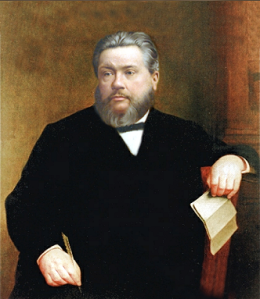
“The Perpetuity of the Law of God”
A Message Delivered on May 21, 1882 by C. H. Spurgeon
Related Posts:
The Perfect Law of God Must Stand Forever
The Law of God Must Be Perpetual: No Abrogation, No Amendment.
Misunderstanding Grace : “outside the law” is not the same as having no law
Misunderstanding Grace: Easy to miss the path and go far astray from the truth
Misunderstanding Grace – Antinomianism’s primary error is confusing Justification with Sanctification
Misunderstanding on the teaching of Grace
Friday, October 23, 2009
Prosperity Gospel is the Religion of the Pharisees: "I'm rich because I'm so righteous that God is blessing me."

The Pharisees were ...... -- using their religious position to fill their pockets. Twice Jesus had to take a whip and cleanse the temple (Jn. 2:13-17; 21:12- 13). Their system was one that filled their greed. They were using their religious position to get rich. There is nothing more foul smelling to the nostrils of God than hypocrisy and greed. I daresay there are people in our own country (some even well-known on television) who are doing exactly the same thing. Wherever there is religious hypocrisy, inevitably there is the problem of greed.
To the Pharisees, being rich was a sign of holiness. In other words, "I'm rich because I'm so righteous that God is blessing me." When the Lord said, "It is easier for a camel to go through the eye of a needle, than for a rich man to enter into the kingdom of heaven" (Mt. 19:24), that was absolutely and utterly shocking. To the Pharisees, riches were the stamp of divine approval on one's life because God gave riches to those who were righteous. To say that a rich man could no more enter the kingdom than a camel could go through the eye of a needle was really a shocking statement because they equated money with the blessing of God. So they greedily gathered money, and the richer they became the more they pretended to the people that they were spiritual. Overcoming Materialism Treasure in Heaven--Part 1 by John MacArthur
"Do not lay up for yourselves treasures on earth, where moth and rust destroy and where thieves break in and steal, but lay up for yourselves treasures in heaven, where neither moth nor rust destroys and where thieves do not break in and steal. For where your treasure is, there your heart will be also. "The eye is the lamp of the body. So, if your eye is healthy, your whole body will be full of light, but if your eye is bad, your whole body will be full of darkness. If then the light in you is darkness, how great is the darkness! "No one can serve two masters, for either he will hate the one and love the other, or he will be devoted to the one and despise the other. You cannot serve God and money. Mat 6:19-24
Related Posts:
I Have Enough
Our Greatest Reward
Be Faithful to The Gospel of Jesus Christ: No Prosperity “gospel”, No False “christ”
Distinguish Between the Gospel and False Gospels
Tuesday, October 20, 2009
Misunderstanding Grace : “outside the law” is not the same as having no law

 ‘In [Romans] chapter 6, St. Paul takes up the special work of faith, the struggle which the spirit wages against the flesh to kill off those sins and desires that remain after a person has been made just. He teaches us that faith doesn’t so free us from sin that we can be idle, lazy and self-assured, as though there were no more sin in us. Sin is there, but, because of faith that struggles against it, God does not reckon sin as deserving damnation. Therefore we have in our own selves a lifetime of work cut out for us; we have to tame our body, kill its lusts, force its members to obey the spirit and not the lusts. We must do this so that we may conform to the death and resurrection of Christ and complete our Baptism, which signifies a death to sin and a new life of grace. Our aim is to be completely clean from sin and then to rise bodily with Christ and live forever.
St. Paul says that we can accomplish all this because we are in grace and not in the law. He explains that to be “outside the law” is not the same as having no law and being able to do what you please. No, being “under the law” means living without grace, surrounded by the works of the law. Then surely sin reigns by means of the law, since no one is naturally well-disposed toward the law. That very condition, however, is the greatest sin. But grace makes the law lovable to us, so there is then no sin any more, and the law is no longer against us but one with us.
This is true freedom from sin and from the law; St. Paul writes about this for the rest of the chapter. He says it is a freedom only to do good with eagerness and to live a good life without the coercion of the law. This freedom is, therefore, a spiritual freedom which does not suspend the law but which supplies what the law demands, namely eagerness and love. These silence the law so that it has no further cause to drive people on and make demands of them. It’s as though you owed something to a moneylender and couldn’t pay him. You could be rid of him in one of two ways: either he would take nothing from you and would tear up his account book, or a pious man would pay for you and give you what you needed to satisfy your debt. That’s exactly how Christ freed us from the law. Therefore our freedom is not a wild, fleshy freedom that has no obligation to do anything. On the contrary, it is a freedom that does a great deal, indeed everything, yet is free of the law’s demands and debts.’ Preface to the Letter of St. Paul to the Romans by Martin Luther, 1483-1546 Translated by Bro. Andrew Thornton, OSB
Related Posts:
Misunderstanding Grace: Easy to miss the path and go far astray from the truth
Misunderstanding Grace – Antinomianism’s primary error is confusing Justification with Sanctification
Misunderstanding on the teaching of Grace
The Heart of Every Real Christian is Most Reverent Towards the Law of the Lord
Thursday, October 8, 2009
God Centered Worship: A Matter of Infinite Importance

"You worship what you do not know; we worship what we know, .... But the hour is coming, and is now here, when the true worshipers will worship the Father in spirit and truth, for the Father is seeking such people to worship him. God is spirit, and those who worship him must worship in spirit and truth." John 4:22-24
Worship matters and it must be anchored entirely on God's truth. The entire truth about God, which He has revealed about himself within His word, is the key for any worshiper in truly knowing God and worshiping God acceptably in spirit and in truth. It is a matter of infinite importance. Without getting or accepting the complete truth about God as revealed by the scriptures only mean a professed worshiper is not truly worshiping the God of the bible but a "god" of his or her own imagination. It is a matter of eternal consequence when people get worship wrong, as a result they do not worship God acceptably however well meaning they may be. Worship matters, it really does.
‘Worship is not an addendum to life, it is at life’s core. You see, the people who worship God acceptably enter into eternal life, but the people who do not worship God acceptably enter into eternal death. Worship, then, becomes the core. Time and eternity are determined by the nature of a person’s worship.' True Worship by John MacArthur, Jr.
Quotes from Bob Kauflin’s book “Worship Matters: Leading Others to Encounter the Greatness of God“:
Worship matters. It matters to God because he is the one ultimately worthy of all worship. It matters to us because worshiping God is the reason for which we were created. And it matters to every worship leader, because we have no greater privilege than leading others to encounter the greatness of God. That’s why it’s so important to think carefully about what we do and why we do it. (Pg 19)
Because I want to make it clear from the start that worship isn’t primarily about music, techniques, liturgies, songs, or methodologies. It’s about our hearts. It’s about what and who we love more than anything. Here’s my sobering discovery. I learned that I could lead others in worshiping God and be worshiping something else in my own heart. But by the grace of God, I was beginning to understand what worship is all about. (Pg 25)
That’s why as worship leaders our primary concern can’t be song preparation, creative arrangements, or the latest cool gear. Our primary concern has to be the state of our hearts. The great hymn-writer Isaac Watts once wrote: The Great God values not the service of men, if the heart be not in it: The Lord sees and judges the heart; he has no regard to outward forms of worship, if there be no inward adoration, if no devout affection be employed therein. It is therefore a matter of infinite importance, to have the whole heart engaged steadfastly for God. (Pg 26)
Related Posts:
God Centered Worship: The Importance of Singing Truth
Genuine worship is a response to divine truth as God has revealed Himself in His Word
What Kind of Worship God Desires From His People ?
Finding Joy in Worship – Psalm 100 by Dr. Arturo G. Azurdia
Thursday, October 1, 2009
God Centered Worship: The Importance of Singing Truth

Soli Deo Gloria: The Erosion Of God-Centered Worship
Wherever in the church biblical authority has been lost, Christ has been displaced, the gospel has been distorted, or faith has been perverted, it has always been for one reason: our interests have displaced God’s and we are doing his work in our way. The loss of God’s centrality in the life of today’s church is common and lamentable. It is this loss that allows us to transform worship into entertainment, gospel preaching into marketing, believing into technique, being good into feeling good about ourselves, and faithfulness into being successful. As a result, God, Christ and the Bible have come to mean too little to us and rest too inconsequentially upon us.God does not exist to satisfy human ambitions, cravings, the appetite for consumption, or our own private spiritual interests. We must focus on God in our worship, rather than the satisfaction of our personal needs. God is sovereign in worship; we are not. Our concern must be for God’s kingdom, not our own empires, popularity or success.
We reaffirm that because salvation is of God and has been accomplished by God, it is for God’s glory and that we must glorify him always. We must live our entire lives before the face of God, under the authority of God and for his glory alone. We deny that we can properly glorify God if our worship is confused with entertainment, if we neglect either Law or Gospel in our preaching, or if self-improvement, self-esteem or self- fulfillment are allowed to become alternatives to the gospel.
THE CAMBRIDGE DECLARATION of the Alliance of Confessing Evangelicals April 20, 1996
Quotes from Bob Kauflin's book "Worship Matters: Leading Others to Encounter the Greatness of God":
"singing and preaching aren’t incompatible or opposed to each other in any way. Both are meant to exalt the glory of Christ in our hearts, minds, and wills. Then whole meeting is worship; the whole meeting should be filled with God’s Word. And the whole meeting should be characterized by the Spirit’s presence." (Pg 89)
"Songs are de facto theology. They teach us who God is, what he’s like, and how to relate to him. ”We are what we sing,” one man said. That’s why we want to sing God’s Word.' (Pg 92)
"Singing God’s Word can include more than reciting specific verses in song. If the Word of Christ is going to “dwell in [us] richly” (Colossians 3:16), we need songs that explain, clarify, and expound on what God’s word says. We need songs that have substantive, theologically rich, biblically faithful lyrics. A consistent diet of shallow, subjective worship songs tends to produce shallow, subjective Christians. (Pg 92)
.......Too often we can be tempted to choose songs because of the music rather than the theological content. We need to realize that when words are combined with music we can be deceived. Music can make shallow lyrics sound deep. A great rhythm section can make drivel sound profound and make you want to sing it again." (Pg 93)
Related Posts:
Genuine worship is a response to divine truth as God has revealed Himself in His Word
What Kind of Worship God Desires From His People ?
Finding Joy in Worship – Psalm 100 by Dr. Arturo G. Azurdia
Thursday, September 24, 2009
All Providences Come About For The Good of Those That Are Christ’s

In this embedded clip is a moving testimony of Brady, a young boy who was diagnosed with brain cancer at age of 10. It was then God shined the glorious Gospel of Jesus Christ into his heart. He was transformed and showed great joy through the 4 years of living and suffering with this terminal illness. His testimony before all people who came into contact with him showed that he had a great hunger for God showing much faith and joy in knowing that God was at work in him. Through it all, the testimony of his parents showed that their lives and that of their other two children were drawn much closer to God through the experience that Brady underwent. We may not have the answers now as to why God allowed experience such as this to come to Brady but we can trust that such seemingly sad experience worked for His purpose and for His Glory. God ensured that all things worked together for good for Brady and his family.
In Matthew Henry''s commentary on Rom 8:28:
The privilege of the saints, that all things work together for good to them, that is, all the providences of God that concern them. All that God performs he performs for them, Psalms 57:2. Their sins are not of his performing, therefore not intended here, though his permitting sin is made to work for their good, 2 Chron 32:31. But all the providences of God are theirs - merciful providences, afflicting providences, personal, public. They are all for good; perhaps for temporal good, as Joseph's troubles; at least, for spiritual and eternal good. That is good for them which does their souls good. Either directly or indirectly, every providence has a tendency to the spiritual good of those that love God, breaking them off from sin, bringing them nearer to God, weaning them from the world, fitting them for heaven. Work together. They work, as physic works upon the body, various ways, according to the intention of the physician; but all for the patient's good. They work together, as several ingredients in a medicine concur to answer the intention. God hath set the one over against the other (Eccl 7:14): sunergei, a very singular, with a noun plural, denoting the harmony of Providence and its uniform designs, all the wheels as one wheel, Eze 10:13. He worketh all things together for good; so some read it. It is not from any specific quality in the providences themselves, but from the power and grace of God working in, with, and by, these providences. All this we know - know it for a certainty, from the word of God, from our own experience, and from the experience of all the saints.
And we know that for those who love God all things work together for good, for those who are called according to his purpose. (Romans 8:28)
I cry out to God Most High, to God who fulfills his purpose for me. Psalms 57:2
God left him to himself, in order to test him and to know all that was in his heart." 2 Chron 32:31
In the day of prosperity be joyful, and in the day of adversity consider: God has made the one as well as the other, so that man may not find out anything that will be after him. Eccl 7:14
Subscribe to:
Posts (Atom)